Google Chrome Keyboard Shortcuts: The Complete Guide for Mac
Browse faster in Google Chrome on Mac with essential shortcuts for tabs, windows, the address bar, find, bookmarks, page controls, and developer tools.
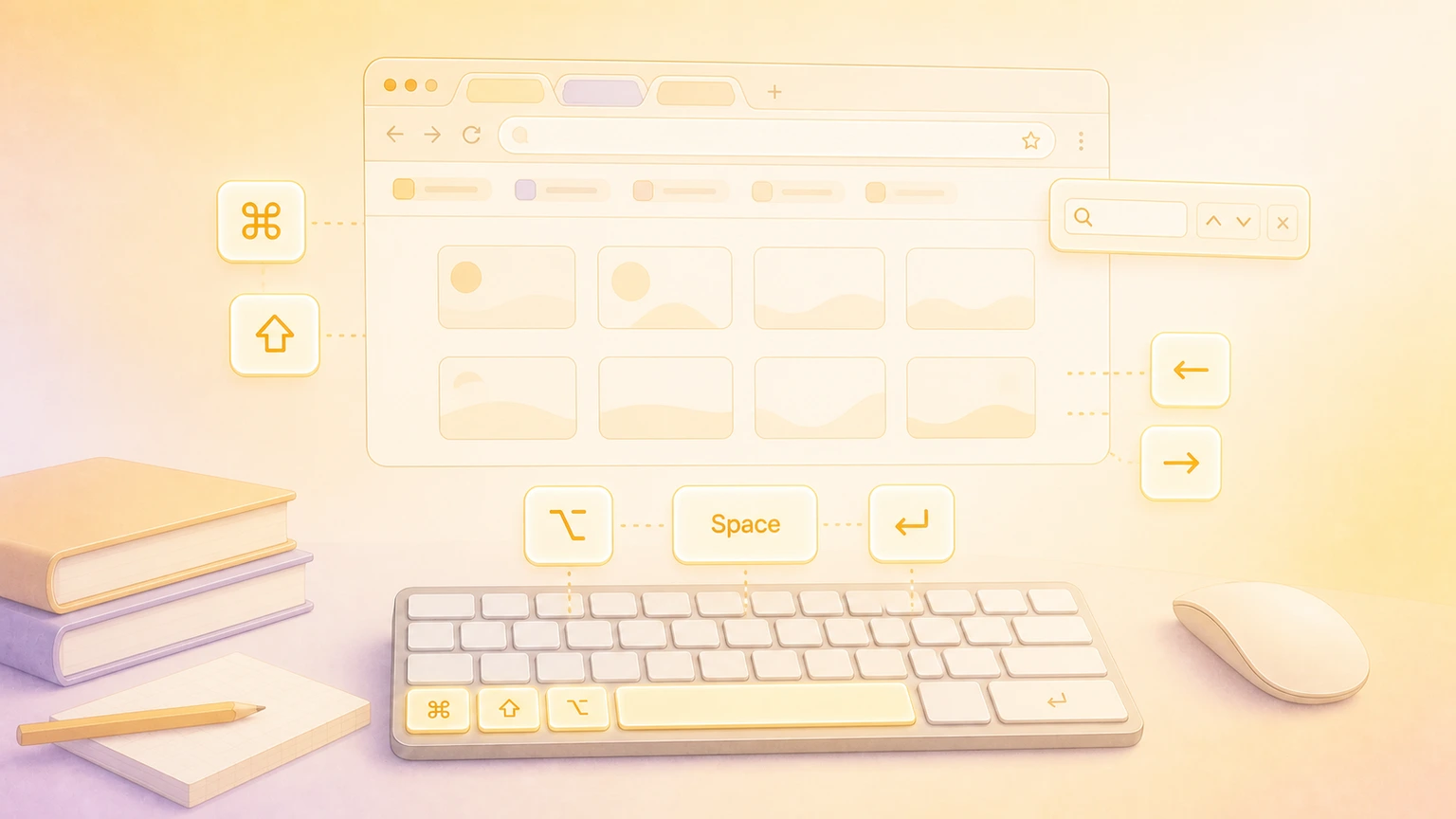
Google Chrome is one of the most familiar Mac apps on the planet, but many people still use it as a click-first browser. Once you learn Chrome’s Mac shortcuts, tabs, history, search, bookmarks, downloads, and page controls become much easier to manage from the keyboard.
Google’s official shortcut reference includes Mac-specific shortcuts and notes that some navigation options depend on Full Keyboard Access in macOS. This guide rewrites Chrome’s Mac commands with consistent notation: ⌘ for Command, ⇧ for Shift, ⌥ for Option, and ⌃ for Control.
Essential Chrome shortcuts
Start with these if you want Chrome to feel faster today.
| Action | Shortcut |
|---|---|
| Open a new tab | ⌘ + T |
| Open a new window | ⌘ + N |
| Open a new Incognito window | ⇧ + ⌘ + N |
| Reopen recently closed tabs | ⇧ + ⌘ + T |
| Jump to the address bar | ⌘ + L |
| Find on the current page | ⌘ + F |
| Reload the current page | ⌘ + R |
| Reload and ignore cached content | ⇧ + ⌘ + R |
| Close the current tab or pop-up | ⌘ + W |
| Quit Chrome | ⌘ + Q |
Pro tip: ⇧ + ⌘ + T reopens closed tabs in the order they were closed. It is one of the fastest ways to recover after closing a useful reference, docs page, or checkout tab by mistake.
Tabs and windows
Chrome’s tab shortcuts are the ones worth turning into muscle memory first, especially if you research, write, code, or compare several pages at once.
| Action | Shortcut |
|---|---|
| New tab and jump to it | ⌘ + T |
| New window | ⌘ + N |
| New Incognito window | ⇧ + ⌘ + N |
| Next open tab | ⌘ + ⌥ + → |
| Previous open tab | ⌘ + ⌥ + ← |
| Jump to tab 1 through 8 | ⌘ + 1 through ⌘ + 8 |
| Jump to the last tab | ⌘ + 9 |
| Previous page in the current tab history | ⌘ + [ or ⌘ + ← |
| Next page in the current tab history | ⌘ + ] or ⌘ + → |
| Close current tab or pop-up | ⌘ + W |
| Close current window | ⇧ + ⌘ + W |
| Minimize the window | ⌘ + M |
| Hide Chrome | ⌘ + H |
| Move tabs left or right | ⌃ + ⇧ + Page Up / ⌃ + ⇧ + Page Down |
| Toggle full screen | Fn + F |
| Leave full screen | Fn + F or hold Escape |
If you keep a pinned set of everyday tabs, ⌘ + 1 through ⌘ + 4 can become a quick launcher for email, calendar, docs, and your project dashboard.
Address bar and search
The address bar is Chrome’s command center. Use these shortcuts when you want to search, open a URL, or switch search engines without touching the trackpad.
| Action | Shortcut or trigger |
|---|---|
| Jump to the address bar | ⌘ + L |
| Search with the default search engine | Type a search term, then Return |
| Search with another search engine | Type the search engine name, press Tab, then search |
Add www. and .com, then open in current tab | Type a site name, then ⌃ + Return |
Add www. and .com, then open in new window | Type a site name, then ⌃ + ⇧ + Return |
| Open a typed website in a new background tab | Type a web address, then ⌘ + Return |
| Remove a highlighted address-bar prediction | ↓, then ⇧ + Fn + Delete |
| Search the web from a page | ⌘ + ⌥ + F |
| Move cursor to the address bar | ⌃ + F5 |
Pro tip: use ⌘ + L, type a partial site name or search phrase, and press Return. For most browsing sessions, this is faster than opening a new tab first and then clicking into the field.
Find, bookmarks, history, and downloads
These shortcuts are useful when Chrome turns into your research workspace.
| Action | Shortcut |
|---|---|
| Open the Find Bar | ⌘ + F |
| Jump to the next Find match | ⌘ + G |
| Jump to the previous Find match | ⇧ + ⌘ + G |
| Search for selected text when Find Bar is open | ⌘ + E |
| Show or hide the Bookmarks Bar | ⇧ + ⌘ + B |
| Open Bookmark Manager | ⌘ + ⌥ + B |
| Bookmark the current page | ⌘ + D |
| Bookmark all open tabs in a new folder | ⇧ + ⌘ + D |
| Open History | ⌘ + Y |
| Open Downloads | ⇧ + ⌘ + J |
| Open Settings | ⌘ + , |
| Clear browsing data | ⇧ + ⌘ + Delete |
When you are writing from several sources, combine ⌘ + F with ⌘ + G and ⇧ + ⌘ + G to scan a long page without repeatedly opening and closing the Find Bar.
Page controls and reading
These shortcuts help when you are reading documentation, checking a design, reviewing a PDF in Chrome, or moving through a long article.
| Action | Shortcut |
|---|---|
| Print current page | ⌘ + P |
| Save current page | ⌘ + S |
| Page Setup | ⌘ + ⌥ + P |
| Stop page loading | Escape |
| Move forward through clickable items | Tab |
| Move backward through clickable items | ⇧ + Tab |
| Open a local file in Chrome | ⌘ + O, then choose a file |
| View page source | ⌘ + ⌥ + U |
| Make the page bigger | ⌘ + + |
| Make the page smaller | ⌘ + - |
| Reset page zoom | ⌘ + 0 |
| Scroll down one screen | Space |
| Scroll up one screen | ⇧ + Space |
| Open the home page in the current tab | ⇧ + ⌘ + H |
If you present websites or teach browser workflows, keep the zoom shortcuts close. ⌘ + +, ⌘ + -, and ⌘ + 0 let you quickly make a page readable on a projector or screen recording without changing the site itself.
Links, tabs, and mouse-assisted shortcuts
Chrome also documents several shortcuts that pair the keyboard with the mouse or trackpad.
| Action | Shortcut |
|---|---|
| Open a link in a new background tab | ⌘ + Click |
| Open a link in a new tab and jump to it | ⇧ + ⌘ + Click |
| Open a link in a new window | ⇧ + Click |
| Return a dragged tab to its original position | Escape while dragging |
| Save the current page as a bookmark | Drag the address to the Bookmarks Bar |
| Download the target of a link | ⌥ + Click |
| Show browsing history for Back or Forward | Right-click or click and hold Back/Forward |
| Increase the window to full height | Double-click a blank area of the tab strip |
These are useful when you are opening search results in batches. Use ⌘ + Click to collect pages in background tabs, then jump through them with ⌘ + ⌥ + →.
Developer and advanced shortcuts
Developers, support teams, and QA testers usually need these more than casual browsers.
| Action | Shortcut |
|---|---|
| Open Developer Tools | ⌘ + ⌥ + I |
| Open JavaScript Console | ⌘ + ⌥ + J |
| View page source | ⌘ + ⌥ + U |
| Open feedback form | ⌘ + ⌥ + ⇧ + I |
| Turn on Caret Browsing | F7 |
| Jump to the main menu bar | ⌃ + F2 |
| Cycle focus to dialogs and toolbars | ⌘ + ⌥ + ↑ / ⌘ + ⌥ + ↓ |
| Focus inactive dialogs | ⌘ + ⌥ + ⇧ + A |
| Open split view in the active tab | ⌘ + ⌥ + N |
Some focus and navigation shortcuts depend on macOS keyboard settings. If a focus shortcut does not behave as expected, check Full Keyboard Access in System Settings and the focused area inside Chrome.
Tab groups and keyboard navigation
Chrome’s tab group shortcuts are more about focus than memorizing a single modifier combination.
| Action | Shortcut |
|---|---|
| Move focus through tab selection with VoiceOver on | Tab |
| Move focus backward through tabs | ⇧ + Tab |
| Collapse or expand a focused tab group | Space or Return |
| Move a focused tab or tab group left | ⌃ + ← |
| Move a focused tab or tab group right | ⌃ + → |
| Focus keyboard on text boxes or list items | ⌘ + F7 |
Tab groups are easiest to manage when you first move keyboard focus to the tab strip. If Full Keyboard Access or VoiceOver changes your focus behavior, use Chrome’s official help as the reference for the current accessibility path.
Customizing and discovering Chrome shortcuts
Chrome does not offer a single custom shortcut editor for every built-in browser command. The most reliable places to discover shortcuts are Chrome’s menu bar, the official Chrome keyboard shortcuts help page, and the current app behavior on your Mac keyboard layout.
Extension shortcuts are different. Chrome extensions can define command shortcuts, and Chrome for Developers documents that users can manually add or remap extension command shortcuts from chrome://extensions/shortcuts. That is useful for extension actions, but it does not mean every built-in Chrome shortcut can be reassigned there.
Show Chrome shortcuts on screen
Recording a browser tutorial, customer-support walkthrough, classroom lesson, or developer demo? KeyScreen displays your keystrokes beautifully on screen so viewers can follow every ⌘ + L, ⇧ + ⌘ + T, tab jump, find command, and zoom shortcut without guessing what you pressed.
You can also get KeyScreen on the Mac App Store if you want a clean keystroke overlay for tutorials, demos, livestreams, and remote training.